
About Denver Pro Landscape
Denver sites vary from compact Capitol Hill lots to foothill properties near Golden and Castle Rock. Front Range clay, freeze-thaw movement, Denver Water guidance, and xeric plant choices shape each written estimate.
Our service territory covers Denver County and the immediately adjacent areas — Douglas to the south, Adams to the north, Arapahoe to the east, and Jefferson to the west. We serve Denver proper plus Aurora, Lakewood, Centennial, Highlands Ranch, Littleton, Englewood, Wheat Ridge, Arvada, Thornton, Westminster, and Parker. If you’re in that radius, your property is on our service map.
Denver landscape work is divided by operating need: water-system service, commercial grounds care, built landscape features, routine mowing, design planning, and seasonal debris removal. Each estimate should stay within the selected landscape scope and state any work that requires a different trade.
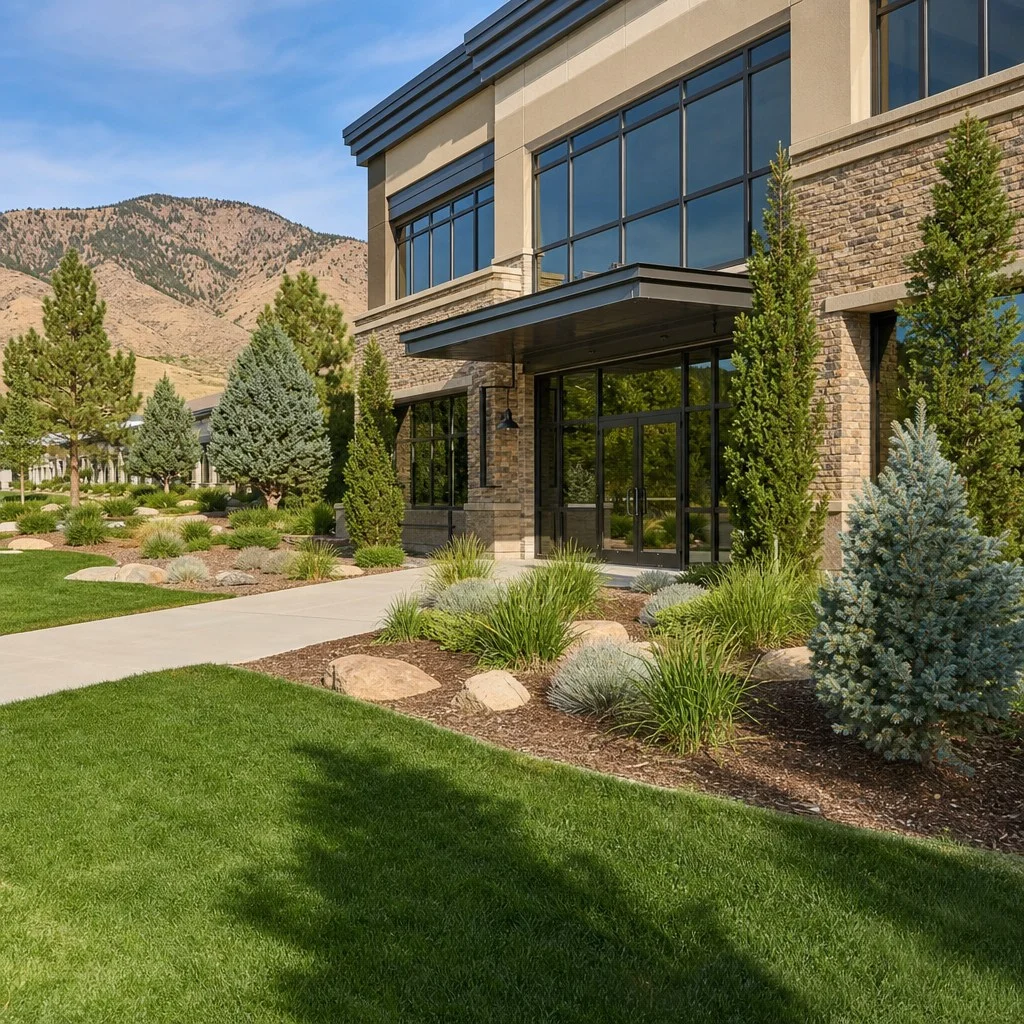
Denver sits a mile high on the Front Range, which is landscaping’s polite way of saying “nothing grows easily here.” Cool-season grasses like tall fescue burn out in July and August. Cool-season grasses green up early and hold color through fall, going semi-dormant only in deep winter. Every plant choice, every mowing schedule, every irrigation setting has to account for the fact that our climate fights both extremes.
Denver sites vary from compact Capitol Hill lots to foothill properties near Golden and Castle Rock. Front Range clay, freeze-thaw movement, Denver Water guidance, and xeric plant choices shape each written estimate.
The soil is the other half of the challenge. Colorado clay is dense, compacted, slow-draining, and often only a few inches of topsoil deep. Before a new bed or a hardscape goes in, drainage gets assessed, the soil is amended where necessary, and features are planned to account for freeze-thaw movement. Shortcuts here produce failures in year two or three — and we’d rather do it once than fix it later.
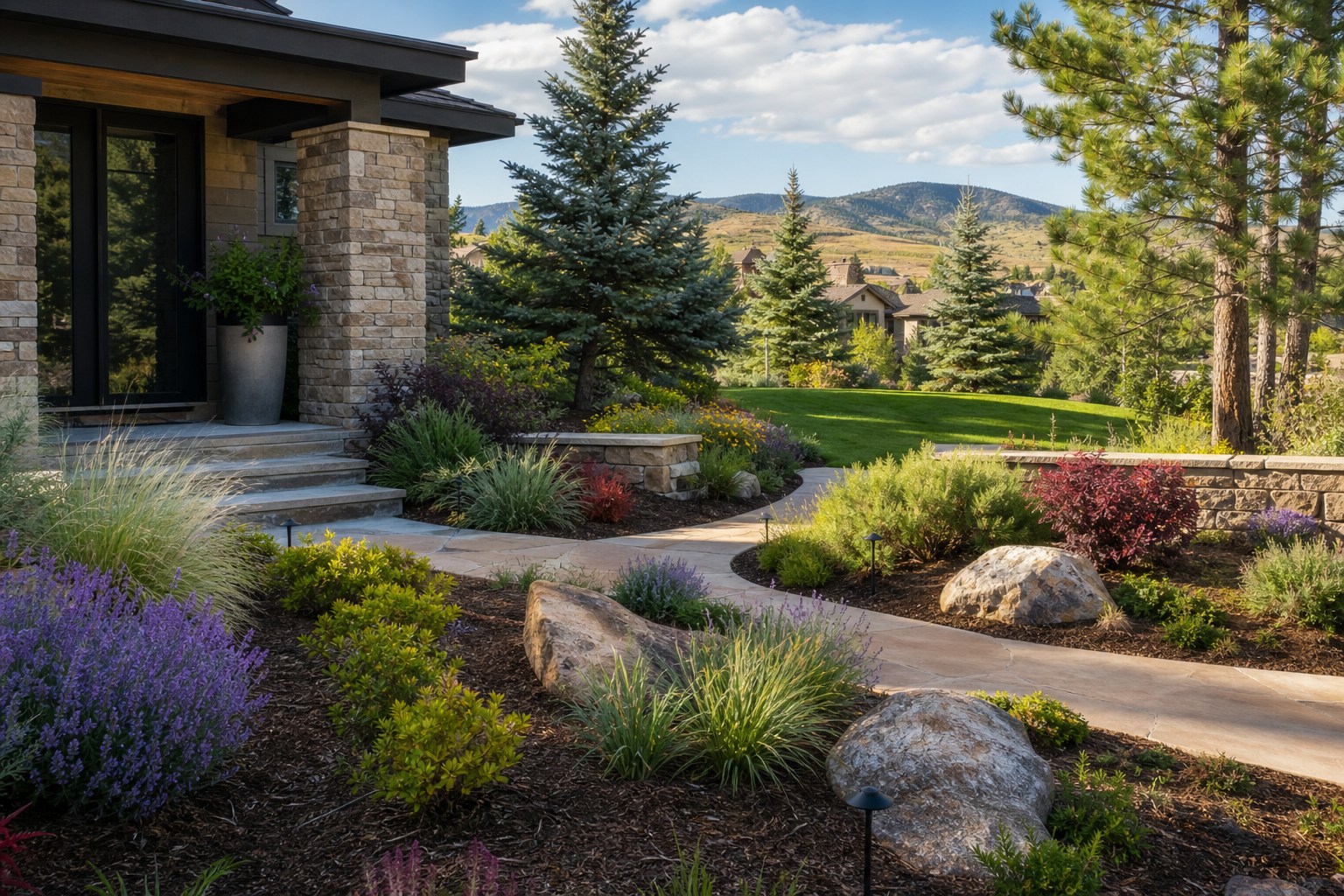
Three things set us apart from most Denver crews: fixed scheduling, flat pricing, and Front Range cool-season expertise. Your lawn gets mowed on the same day each week — not “sometime this week.” The quote is the price; we don’t tack on edging, blow-off, or fuel surcharges. And our crew leads know why fescue needs 3.5-inch mowing in July and why a fine-fescue lawn needs far less feeding.
For Denver properties, the selected provider’s written estimate should identify who will access the site, how visit notes are maintained, where questions are directed, and what insurance documentation is available for the proposed work. Confirm those items for the current engagement rather than assuming a fixed crew or continuing relationship.
Review 2 in Service Standards — Key details
Our crews are routed daily out of central Denver with coverage extending into all adjacent Arapahoe, Jefferson, Adams, Douglas, and Denver County suburbs. Drive time matters — if you’re more than 30 minutes from downtown, we’ll let you know during the quote whether service makes sense for your location. For most of the metro, it does.
Use the Denver service map to check the address against the listed coverage footprint. A property scope can then be sent through the project form, with (720) 650-0165 available for contact by phone.

Frequently Asked Questions
List every condition that could change method, quantity or timing and assign a field check to it. The editorial and service standards brief should not turn an unverified condition into a promise or fixed allowance.
Tie each stage to a visible finished result: approved layout, completed preparation, placed material, tested component or accepted cleanup. Avoid calendar promises until access, materials and site conditions are confirmed.
Return to the approved boundary, quantities, named materials, exclusions and photographs. Record any variance and its approval so completion is based on the written estimate rather than memory.