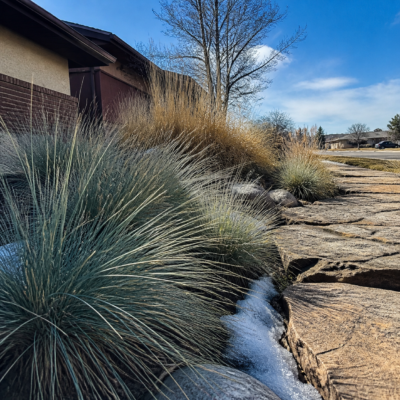
What site facts shape hardscaping in Denver?
Front Range hardscape planning should document freeze-thaw exposure, compacted soil, drainage, base depth, material quantities, access, and Denver permit requirements before a proposal is compared.
Hardscaping in Denver means patios, walkways, walls and fire features built on heavy clay that swells and shrinks with the weather. Denver Pro Landscape helps homeowners plan these projects: what goes where, where the water runs, and which city permits apply. Call (720) 650-0165 or start with our free quote form.
Most hardscape trouble in the Front Range is not about the stone. It is about what sits under the stone, where the water goes, and whether the project needed a permit nobody pulled. This page lays out how a Denver hardscape project should be thought through before anyone digs: the soil, the rules, the sequence, the questions to put to anyone who bids, and what a sensible plan looks like on paper.
One note before we start. We keep construction pricing off this page on purpose. A per-square-foot figure for a patio hides the base depth, the drainage and the access that decide the real total, so we talk about what drives cost and leave the number to a written scope for your yard.
What does hardscaping mean in Denver?
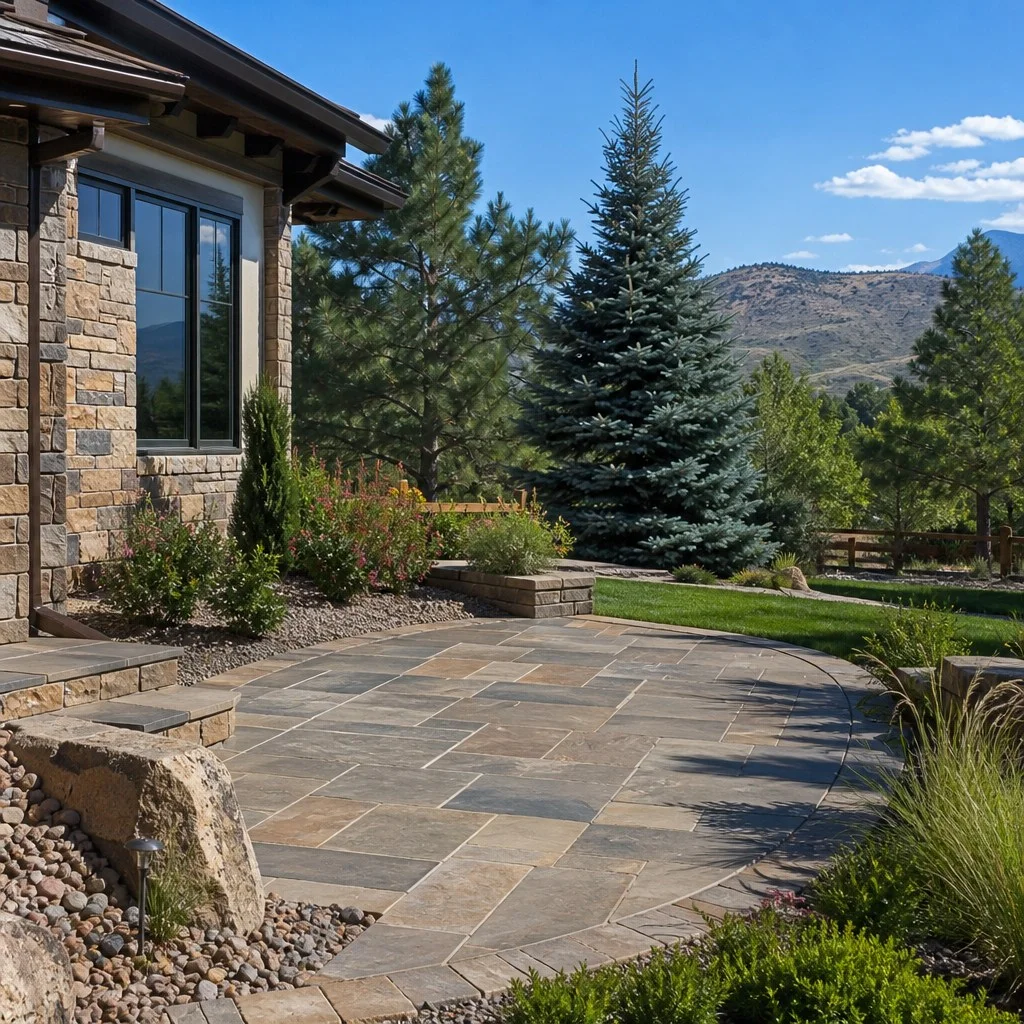
Hardscaping is every non-living element in a landscape: patios, walkways, driveways edging, retaining and seat walls, steps, fire pits, pergola footings and similar built features. In Denver, the term mostly describes stone, pavers, concrete and block set on a prepared base over clay soil.
Plants change by the season. Hardscape is supposed to stay put, which is why it fails more expensively when it moves. A shifted paver is a nuisance. A leaning wall can be a safety and permit problem. Because the metro’s soil moves with moisture, the structure under the visible surface matters more here than in a region with sandy or rocky ground.
Features people plan most often
- Patios in paver, flagstone, or poured concrete, usually with a seat wall or a planted border.
- Walkways and steps that connect doors, gates and garages.
- Retaining walls on sloped lots, which have their own page on retaining walls in Denver.
- Fire pits and fireplaces, often combined with seating walls and built-in storage.
- Outdoor cooking spaces, covered in more detail on our outdoor kitchens page.
Why does clay soil matter so much for hardscape in Denver?
Front Range soil is heavy, alkaline clay that holds water and compacts. Much of it is expansive, meaning it swells when wet and shrinks when dry. That movement can heave or crack patios and walkways and leave low spots that pool water, so base preparation and drainage decide how long a project lasts.
Our Denver soil guide covers the clay in detail. The takeaways for any built surface are plain. Clay drains slowly, so water has to be directed somewhere on purpose. Good grading slopes water away from the house rather than toward it. And dramatic swings between soggy and bone dry make everything worse, which is why downspouts and irrigation heads are part of a hardscape plan and not an afterthought.
Soil depth also varies across the metro. Foothill-adjacent lots on the west side of town can have rock closer to the surface than a flat lot in the east. A site walk and a test dig answer that question for a specific yard far better than any regional average.
Which hardscape projects need a permit in Denver?
Denver requires a zoning permit for walls over 12 inches high, fences over 4 feet tall, and decks more than 12 inches off the ground. Covered patios, porches and pergolas need both zoning and building permits. A simple at-grade patio or walkway generally falls below those thresholds, though drainage review can still apply.
These are the thresholds we verified against the City and County of Denver’s own pages and recorded on our landscaping permit guide:
| Feature | What Denver requires |
|---|---|
| Wall, including retaining wall, over 12 inches high | Zoning permit |
| Masonry or retaining wall over 6 feet high | Commercial engineering plan review and a building permit |
| Wall retaining more than 24 inches of soil, or over 4 feet from the bottom of the footing | Engineered structural calculations |
| Fence over 4 feet tall | Zoning permit |
| Uncovered deck or patio 12 inches or less off the ground | No permit |
| Deck over 12 inches off the ground | Zoning permit; building permit too at 30 inches or higher |
| Covered patio, porch, pergola or carport | Zoning and building permits |
| Fences and walls near the public sidewalk | At least 6 inches back from the sidewalk |
Two more items surface on larger jobs. Changing grade in a street setback can require a zoning grade change exception, and sloped excavations more than 4 feet deep need excavation plans. Some projects also draw Sewer Use and Drainage Permit review. Call Colorado 811 for utility locates before any digging, every time.
Contractor licensing is a separate topic from permits, and it varies by trade and jurisdiction. Before you hire anyone for structural, gas or electrical work around a hardscape, ask the City and County of Denver what license and permit the specific work requires. That question is yours to put to the building authority, and a good bidder will welcome it.
What should you plan before you dig?
Settle the purpose of the space, measure it, mark the water paths, locate utilities, check permit thresholds, and set a sequence with the rest of the yard. A hardscape plan that skips drainage or utility locates is a sketch, not a plan, and it usually gets expensive after demolition begins.
- Purpose. Who uses the space, how many people, and in which seasons? A patio for two coffee drinkers and a patio for twelve guests are not the same footprint.
- Measurements and levels. Length and width are the easy part. The difference in height from the door to the far corner decides steps, walls and drainage.
- Water paths. Where do downspouts, sprinkler runoff and snowmelt go now? New hard surface sheds water faster than turf does.
- Utilities. Gas, water, electric, irrigation lines and communications. Locates come first.
- Permits. Compare height, covered status and grade change against the thresholds above.
- Sequence. Hardscape usually goes in before planting, and irrigation changes go in before the surface covers them.
How much does hardscaping cost in Denver?
The total depends on area, material, base depth, drainage work, access and permits, so we do not print a per-square-foot price here. Stone costs more than concrete pavers, a tight side yard costs more than an open back lawn, and walls add engineering. A written scope for your property gives you the real number.
What we can say is how the drivers rank. Material is the visible one, but ground preparation, drainage and labor belong in the same conversation. Access matters a lot: a wheelbarrow route through a side gate is slower than a truck backing up to the work area. Slope turns a patio into a patio plus walls plus steps. And anything that needs engineering or a building permit adds both cost and calendar time.
For the broader budget picture, our Denver landscaping cost guide covers the full range of yard work, and the landscape design page describes how a plan is drawn before any build price is set.
What does our hardscaping planning process look like, step by step?
We start with your goals and a look at the site, list the constraints, and put the scope in writing. You decide what to keep, drop or phase. The written plan covers drainage, permit checks and sequencing, so that whoever builds it works from the same document.
- Request. You call or use the quote form and tell us what you are picturing. This takes a few minutes. You decide how much detail to share.
- Site conversation. We talk through the yard: slope, water, access, existing features, and what you want it to do. You decide which ideas stay on the list. Plan on about an hour.
- Constraint list. We write down what limits the project: soil and grade, utility locations, permit thresholds, setbacks and sightlines. You review it so nothing surprises you later.
- Scope in writing. Features, approximate dimensions, materials, drainage approach and phases go on paper. You choose between options. This normally takes several business days.
- Plan revisions. You mark it up and we adjust. Most plans go through one or two rounds.
- Decision and sequence. You decide whether to build the whole thing or in phases, and in what order relative to planting and irrigation work.
What does a typical hardscape project look like in Denver?
Typical scopes vary by lot type, but the same pieces show up: a prepared base, a drainage path, edge restraint, a finished surface and a planted border. The three examples below are illustrations of how we think a scope should read, not a record of past jobs.
A typical backyard patio off a back door
An uncovered, at-grade patio sized for a table and chairs, set with a gentle slope away from the house. Scope items: remove sod, excavate, compact the base, install edge restraint, lay the surface, and tie downspouts to a drainage path. Because it stays within 12 inches of the ground and has no roof, it generally sits under the permit thresholds. Planning time is short, and the decision is mostly about material and shape.
A typical sloped side yard with a seat wall
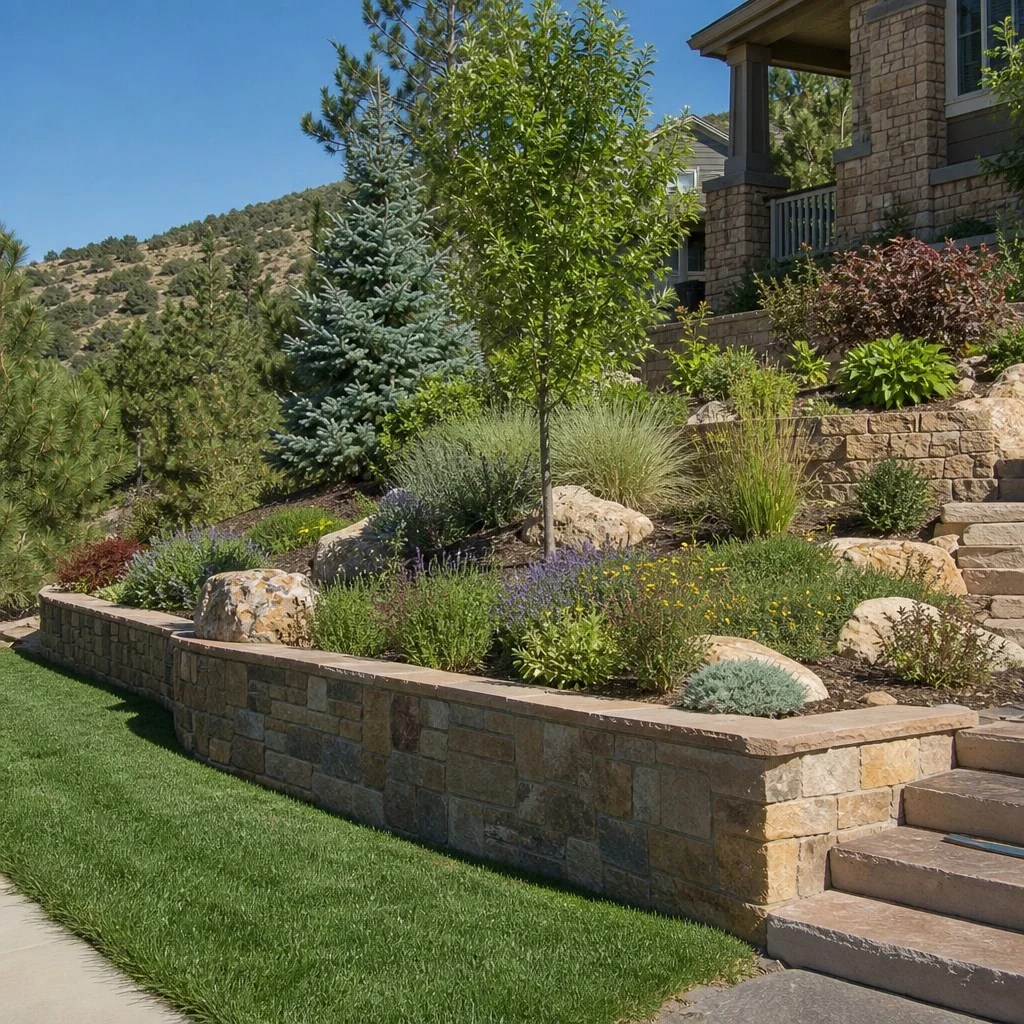
A lot that drops toward the street, with a low wall to level a sitting area. The scope has to answer height first, because a wall over 12 inches triggers a zoning permit and a wall retaining more than 24 inches of soil needs engineered calculations. Drainage behind the wall is the other half of the plan. Timeline stretches because of review.
A typical front walkway and entry steps
A path from the street or driveway to the front door, with steps where grade changes. The scope covers the surface, step risers, width, and the interface with the public sidewalk, including the 6 inch setback rule for fences and walls near it. This is a visible first impression, so material choice and lighting come up early. Our landscape lighting page covers that side of it.
How do freeze-thaw cycles and the Denver climate change the plan?
Denver has hard winters, a short growing season of roughly 150 to 160 days, and wide swings between day and night temperatures. Water that gets into a joint or under a surface freezes, expands and moves things. Good drainage and a stable base are what keep hardscape flat through those cycles.
Our frost date guide gives the averages: last frost in early to mid May and first frost in late September to early October. For hardscape, that means the build window is spring through early fall, with the best work usually in dry stretches, because clay is miserable to work when wet.
Mile-high sun is intense, and a hard surface in full afternoon exposure takes all of it. Where a patio will be used on summer afternoons, shade from a tree, a pergola or a planted border is a design decision worth making early rather than after the surface is down.
How does hardscaping fit with current Denver Water drought rules?
It fits well, because hard surfaces use no water. Denver Water has prohibited lawn watering and spray irrigation since Oct. 1, and Watering Establishment Permits for new sod or seed are closed until further notice. Patios and paths do not need irrigation, though the plantings around them do.
That has a practical effect on sequence. A project that depended on laying new sod around a patio this fall hits the permit closure. Drip-fed beds and trees and shrubs still can be watered by hand or with drip, so planted borders are the version that works under the current stage. Our Denver watering rules page keeps the current status, last verified October 6, 2026 against Denver Water.
Replacing a thirsty lawn with a patio, gravel path and drip-fed beds is also one of the clearest water-saving moves a Denver homeowner has, since hard surface asks for nothing from the hose.
Which materials make sense for a Denver patio or path?
The materials our own Denver cost guide discusses are crusher fines, concrete pavers, and Colorado flagstone or buff sandstone. Crusher fines drain well and look natural, pavers are uniform and repairable, and flagstone gives the regional stone look. Each one needs the same disciplined base underneath.
Here is how we would talk through the choice at a site conversation:
- Crusher fines. A good fit for informal paths and low-use seating areas. Water moves through it, which helps on clay, but it needs edging to stay in place and tops up over time.
- Concrete pavers. Come in many shapes and colors, go down in a pattern and can be lifted and reset if a section settles. That repairability is a real plus on expansive clay.
- Colorado flagstone and buff sandstone. The look most people picture when they say Front Range patio. Irregular stone takes more skill to set evenly and more care at the joints.
Whatever you choose, ask how the joints are filled and how water leaves the surface. A beautiful material set on a poor base is the most common reason a Denver patio looks tired within a few winters.
Can you build a hardscape project in phases?
Yes, and many Denver yards are better for it. A design plan lets you build the patio this year, the wall next year and the plantings after that, without losing the overall picture. Phasing spreads the cost and lets you live with each stage before committing to the next.
The trick is deciding the order on paper first. Drainage and utility runs go in early because they are hard to retrofit under finished stone. Walls come before the level areas they support. Irrigation changes precede surfaces that will cover them. Planting comes last, so that crews are not trampling a new border while they haul stone through it. A phased plan with those dependencies marked is worth far more than a pile of separate quotes.
What questions should you ask anyone who bids on your hardscape?
Ask what base is going under the surface and how deep, where the water will go, who pulls permits, how utilities get located, and what the plan is if rock or a buried line turns up. Specific answers signal real experience. Vague answers are the warning.
- What is the base made of, and how is it compacted in layers?
- How is the surface sloped, and where does the water leave the area?
- Who applies for permits, and which ones does this scope need?
- What happens if the dig hits rock, roots or an unmarked line?
- How are changes priced once work starts?
- What does the owner need to decide before the start date, and by when?
If you are comparing bids, our guide to choosing a landscaper has a longer checklist, and the page on patio contractors in Denver covers the patio-specific questions.
Where in the Denver area do you work?
We work across the Denver metro, including neighborhoods in Denver itself and suburbs such as Littleton, Highlands Ranch, Lakewood, Centennial and Parker. Our areas we serve page lists all of them. Suburb rules and soil conditions differ, so we confirm both at the first site conversation.
The suburb pages most people ask about are Littleton, Highlands Ranch, Lakewood, Centennial and Parker. Each community can run its own permit process and its own homeowner association approvals, which brings us to the final planning item.
Do HOA rules affect hardscape in Denver neighborhoods?
Often, yes. Many metro communities have an architectural review step for patios, walls, fences and visible changes, separate from city permits. Check your covenants and submit a drawing before ordering materials. A plan that already shows dimensions, materials and drainage is easier for a review board to approve.
That is one more reason to have a written scope early. The same document that answers the building authority can go to your HOA, and it keeps everyone arguing about the same drawing.
How do you get started?
Call (720) 650-0165 or fill in the free quote form with your address range, what you want to build and any photos you have. We will set up a site conversation and move toward a written scope you can mark up.
If you are still deciding between a patio, a wall or a full yard redesign, say so. The landscape design process is built for exactly that stage, and it is cheaper to change a drawing than to change a built wall.
What must be measured before scheduling Hardscaping?
Front Range hardscape planning should document freeze-thaw exposure, compacted soil, drainage, base depth, material quantities, access, and Denver permit requirements before a proposal is compared.
What’s Included
- On-site walkthrough with the lead crew member
- Written estimate before any work begins
- Service window confirmed in writing
- Final walkthrough and quality check