What affects seasonal leaf work in Denver?
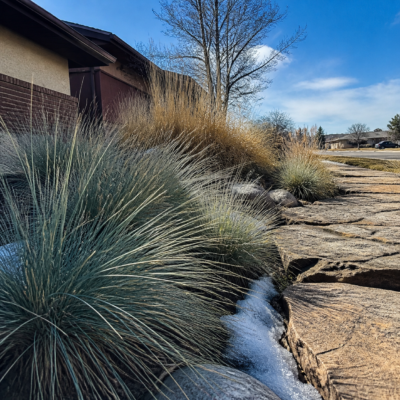
Front Range wind can move dry leaves across turf, gravel, and curb lines before winter weather arrives. A Denver cleanup plan should map the affected surfaces, protect drainage paths, identify disposal handling, and separate leaf work from unrelated pruning.
Denver Pro Landscape handles leaf removal across the Denver metro, from a single raking-and-hauling visit to a full fall program timed to your trees. Our published guide puts a seasonal cleanup at $200 to $600, depending on how much material comes off the property. Call (720) 650-0165 or request a free quote.
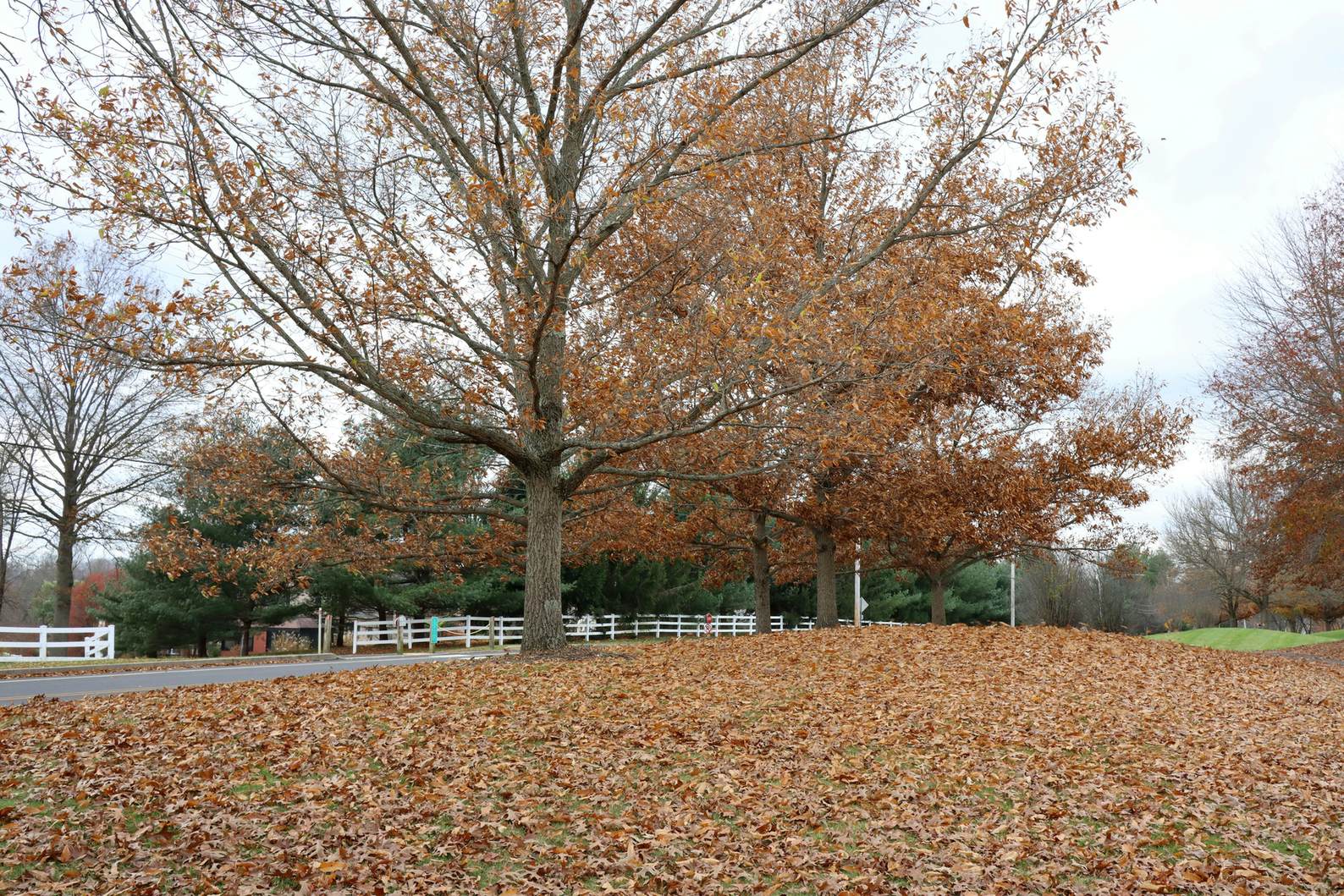
Leaf season in Denver is short and busy. Most of the canopy drops in a few weeks, the first hard freeze is never far behind, and this year the water rules have changed what you can do with a hose and a lawn. This page covers what a leaf cleanup includes, how timing works along the Front Range, what the current Denver Water restrictions mean for fall cleanup, and how to tell a good scope from a thin one.
What does leaf removal in Denver include?
A leaf removal visit clears leaves from turf, beds, walks, drives, gutters-adjacent areas and drains, then hauls them off or mulches them according to the scope you chose. Most properties also need bed cleanup, a last mow and debris pickup folded into the same fall plan.
Scopes differ, so write down what you expect. Some people want leaves blown off the lawn and into the beds as winter mulch. Others want everything bagged and gone. Neither is wrong, but they are different jobs with different labor, and a quote should say which one it is. We list the pieces separately: lawn areas, bed areas, hard surfaces, drains and inlets, and disposal.
The usual line items
- Leaf collection from lawns, using blowers and rakes in beds where equipment would damage plants.
- Bed cleanup: dead annuals out, perennials cut back as needed, fallen leaves cleared from crowns.
- Walks, patios, drives and parking areas cleared so wet leaves do not stain or turn slick.
- Storm drain and yard drain inlets checked and cleared.
- Hauling or mulch-in, as chosen, plus a final mow before winter where it applies.
How much does leaf removal cost in Denver?
Our published Denver guide puts a seasonal cleanup, covering debris hauling, perennial cutback and bed refresh, at $200 to $600 depending on how much material comes off the property. Large lots with mature trees land toward the top, and small yards with a few trees toward the bottom.
That range comes from our own Denver landscaping cost guide, so the figure on this page matches the one on that page. Four things move a quote inside it. Canopy density is the big one: a lot with several mature ash or maples produces far more than a lot with young ornamentals. Lot size sets the area to clear. Disposal method matters because hauling takes more time than blowing into beds. And the number of visits matters, since one heavy pass costs more than a light pass done twice.
A price that sounds cheap but excludes disposal, beds or drain clearing is a different job, so compare scopes before comparing numbers.
When is the best time for leaf removal in Denver?
Denver’s average first fall frost lands around early October, and leaf drop runs from mid-October into early December depending on species. Most properties do best with passes tied to what has actually fallen, rather than one visit on a fixed date. Early passes catch early droppers, and a late pass finishes the job.
Our Denver landscaping calendar puts leaf cleanup in October alongside a lower final mow and winterizer fertilizer for cool-season turf. Ash and maple tend to come down in a rush, while honeylocust sheds small leaflets over a long stretch, and cottonwoods and some others hold on late. If your canopy is mixed, plan on more than one visit.
Weather complicates the calendar. A wet snow on top of unraked leaves mats them into a heavy blanket, which is harder to clear and worse for the grass underneath. When a storm is forecast, a pass ahead of it is worth more than a perfect schedule.
What happens if you skip fall leaf removal on a Denver lawn?
Leaves left in a mat over bluegrass or fescue block light and trap moisture, which weakens the turf into winter and shows up as thin or bare patches in spring. They also clog drains and make walks slick. A light scattering is fine, but a continuous layer is not.
Cool-season lawns are still growing into October, and they use the cooler weeks to store energy. A thick mat of leaves interrupts that. In spring you see the result as patches that green up late or not at all, and those become invitations for weeds. It is cheaper to clear the leaves than to overseed the damage, and the best overseeding window is late August through September, which means a failed fall cannot be fixed until the following year.
Can you still water or power wash during leaf season with Denver Water’s restrictions?
Lawn watering and spray irrigation have been prohibited since Oct. 1, until the Board of Water Commissioners acts. Routine or cosmetic power washing is not permitted after Sept. 30. Trees, shrubs and perennials can still be watered by hand with a shutoff nozzle or with drip.
The practical effect for fall cleanup is that a leaf-stained patio cannot be pressure washed on a whim, since power washing of fences or other outdoor surfaces is only allowed for immediate health or safety reasons. Clearing leaves promptly, before they stain, avoids the problem. Our watering rules page keeps the current details, last verified October 6, 2026 against Denver Water.
Winter is the other piece. The same guidance says established plants still benefit from winter watering on warm, dry days above about 40 degrees, using a hand-held hose with a shutoff nozzle or drip. After leaves are cleared, young trees and evergreens are the plants to remember.
What does our leaf removal process look like, step by step?
We start with a short conversation about your trees and what you want done with the leaves, quote the scope in writing, then schedule passes against the leaf drop. Cleanup visits follow, and you can add passes if a storm changes the picture. Most of the work is in the timing.
- Request. You call or send the quote form with your address range and a note about your trees. This takes a few minutes. You decide whether you want a one-time cleanup or a program.
- Scope. We confirm areas, disposal method and extras like bed cutback or drain clearing. You choose between mulch-in and haul-away.
- Schedule. We set a first pass for when the early droppers are down and plan later passes against the canopy. You approve the dates, with room to move them for weather.
- First pass. Leaves come off the lawn, beds and hard surfaces. Time on site depends on lot size and canopy.
- Follow-up passes. We return for the heavy drop and the late finishers. You can call for an extra pass after a storm.
- Final pass and wrap-up. A last clearing before the ground freezes, with beds tidy and drains open. You decide about spring cleanup before we leave.
What does a typical leaf removal job look like?
Three typical scopes illustrate how the work changes by property. They are examples of how we structure a job, not accounts of specific past clients, and the real scope for your property comes from a conversation about your trees and your yard.
A typical small lot with a few trees
A front and back lawn with two or three medium trees. Two passes: one in late October and one in mid-November. Leaves are blown from lawn and beds, bagged and hauled, with walks cleared. Planning cost sits near the low end of the seasonal range.
A typical older-neighborhood lot with mature canopy
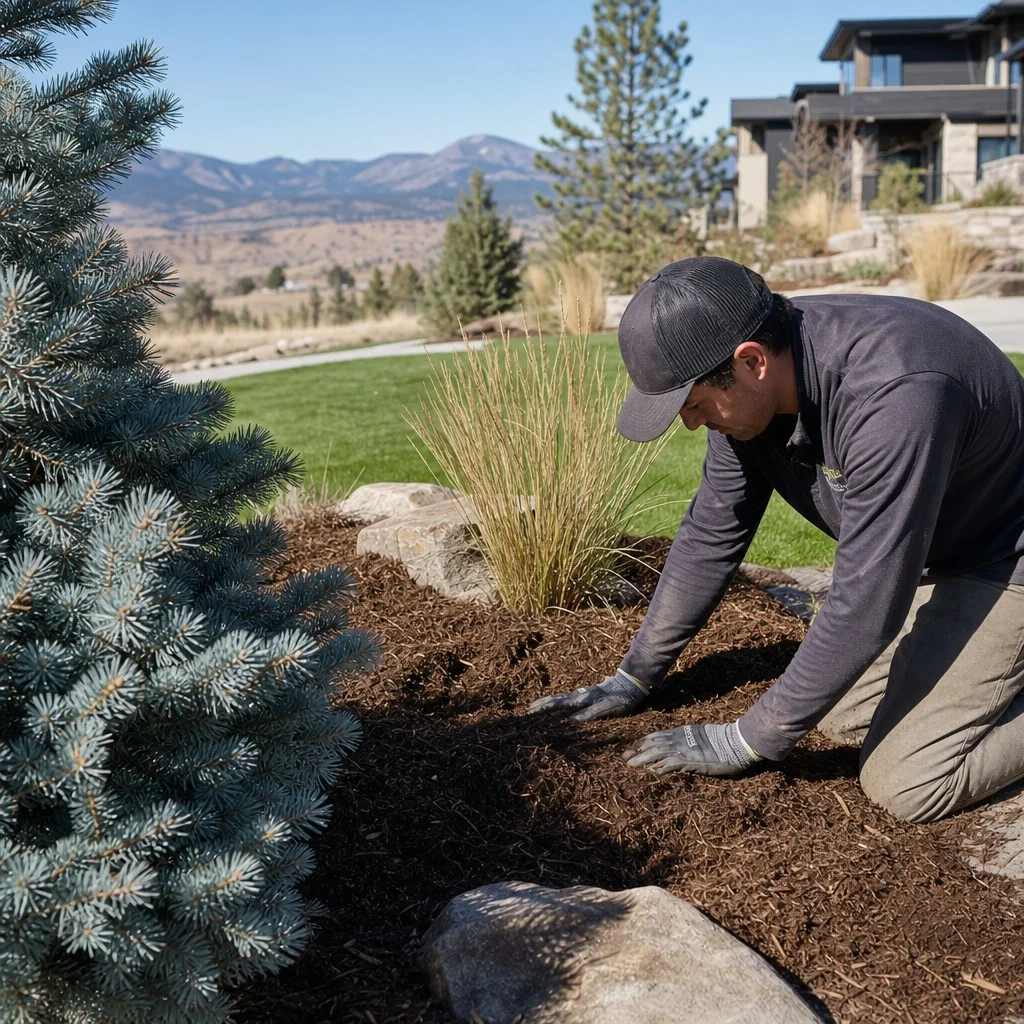
A larger lot under old ash and maple. Three or more passes timed to the drop, with drains cleared and perennials cut back at the end. The late pass picks up what the first two missed. This sits toward the upper end of the range because the material volume is large.
A typical townhome or HOA common area
Shared turf, beds and walks along several buildings. The scope is written zone by zone, with a pass schedule agreed with the manager and drain checks included. Our lawn mowing crews often handle the last cut of the season in the same visit.
What about spring cleanup and storm debris?
Spring cleanup deals with whatever winter left: leaves matted under snow, dead stems, branch litter. Storm debris is its own category. Denver’s worst tree-breaking storms are wet snows in March, April and October, when limbs carry heavy loads, and a quick call after one prevents turf and beds from being smothered.
Our blog piece on ice storms and summer droughts explains why shoulder-season storms do the damage, and what to do after one. Photograph damage before cleanup. Do not shake snow off a loaded branch, since frozen wood is brittle. If a large limb is down or still hanging, that is a job for a tree service, and our tree service page covers it.
Spring work usually runs late March through April, once the snow is gone and before growth takes off. A spring pass pairs well with the first mow and with checking the irrigation system after winter.
What should you do with the leaves, mulch them or haul them?
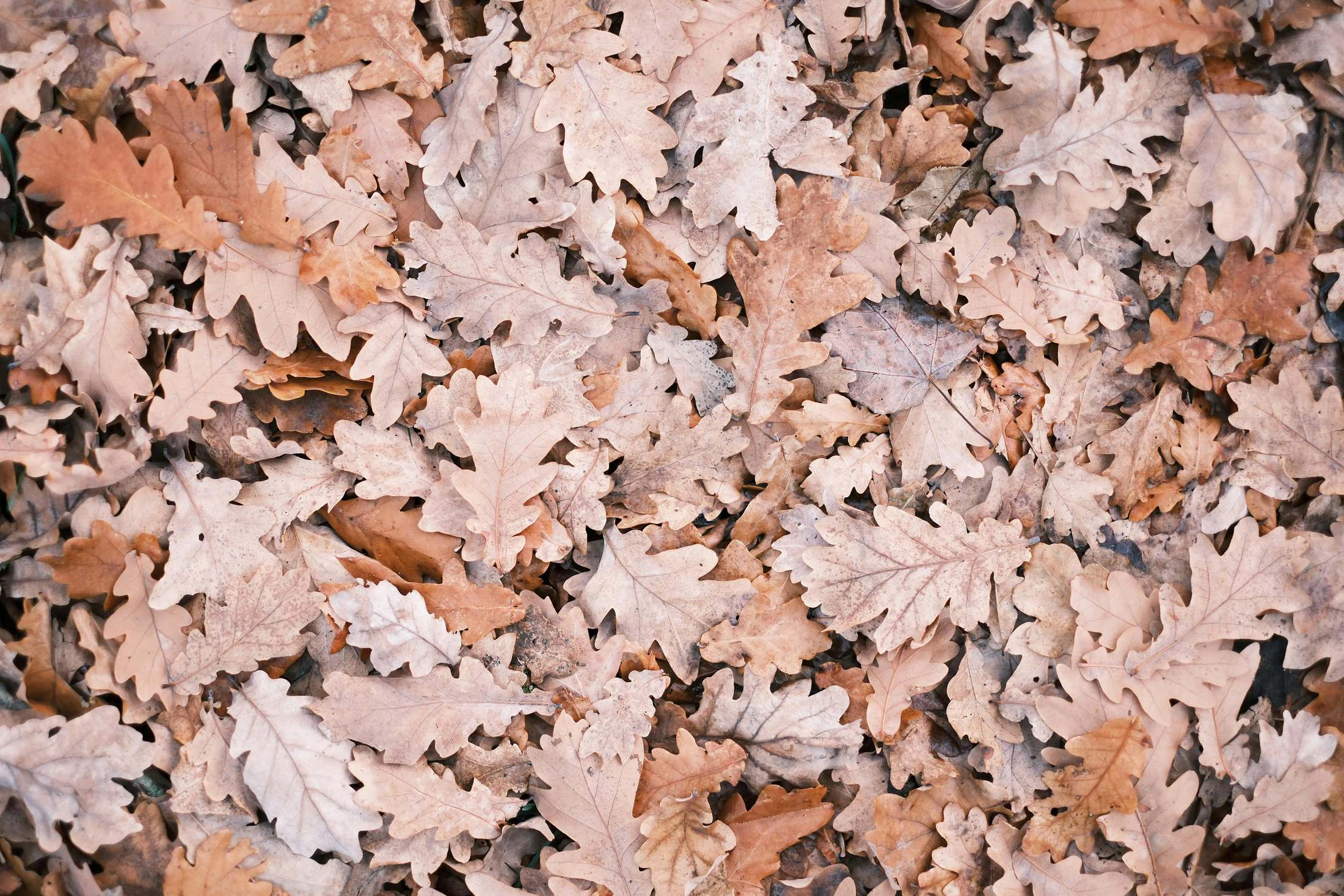
Both work. Light leaf cover can be mulched in place with a mower, which returns organic matter to Denver’s low-organic clay. Heavy fall cover is better hauled or blown into beds in a thin layer. A thick mat on turf is the one thing to avoid, whichever route you choose.
Denver soil is typically alkaline clay with low organic matter, so shredded leaves are a useful amendment, and our soil guide explains why compost and organic material help. The limit is thickness. A thin shredded layer disappears into the turf. A thick layer smothers it. In beds, a few inches of leaf mulch protects crowns, but keep it off the stems and the root flare of shrubs and trees.
How do leaves connect to irrigation winterization?
Both belong on the same fall calendar. After the leaf drop, controllers and valve boxes are easier to reach, and the system still needs to be blown out before the first hard freeze to prevent cracked pipes. Our published guide puts a fall blow-out at $75 to $150.
The sequence matters in a drought-stage year. With spray irrigation already prohibited, there is no watering to do, but water left in lines will still freeze. Clear the valve boxes of leaves so the technician can find them, and book the blow-out before hard frost. Our irrigation page covers the service in more detail.
Which Denver-area communities do you cover?
We cover Denver and nearby suburbs including Aurora, Lakewood, Centennial, Arvada and Westminster. Our areas we serve page lists the rest of the communities. Canopy age differs by neighborhood, and older tree-lined streets usually need more passes than newer subdivisions where the trees are still young.
The suburb pages are here: Aurora, Lakewood, Centennial, Arvada and Westminster. Disposal options can differ by city, so we confirm disposal options for your address when we write the scope.
Which Denver trees create the most leaf work?
Older Denver neighborhoods lean on green ash, Siberian elm and honeylocust, with maples and cottonwoods mixed in. Ash and maple drop quickly, honeylocust sheds fine leaflets over weeks, and brittle elms drop twigs along with leaves. Knowing your species tells you how many passes to plan.
The species mix also tells you what to watch for beyond leaves. Siberian elm is brittle at any age, and ash carries an extra problem: emerald ash borer has reached the Front Range, so an untreated ash is on a countdown regardless of weather. A heavy leaf drop is a good time to look up. Thin crowns, dieback at the tips or bark splitting are worth a call to a tree professional before the next storm season. Leaf cleanup and tree health are separate jobs, but the same walk around the yard can start both conversations.
Evergreens behave differently. Spruce and pine shed needles on a slower cycle, and those needles are not a lawn threat the way a maple’s leaves are. They do belong in the beds scope, since needle litter on walks gets slick.
How do you read a leaf removal quote?
Look for four things: which areas are included, how many passes, what happens to the leaves, and whether drains, beds and hard surfaces are in the price. A quote that says only “fall cleanup” leaves each of those open, and open items turn into extra charges in November.
- Areas. Front, back, side yards, parking strips and any common areas.
- Passes. How many visits, and how the dates are chosen: calendar, or against the drop.
- Disposal. Hauled, bagged, mulched in place or blown into beds.
- Extras. Perennial cutback, drain clearing, final mow.
- Weather. What happens when a storm lands between passes, and whether an extra visit is priced in advance.
Ask for those in writing. A good bidder will have answers ready, and the written list is what you hold them to later.
What should you protect while leaves come off?
Crowns of perennials, the root flare of trees and shrubs, and any new plantings. Rakes and blowers can scrape bark or uproot shallow transplants, so beds get hand work or a gentle touch. Leave a thin leaf layer where it protects plant crowns through winter, and keep it off stems.
Young trees and evergreens are the plants to think about as winter begins. Denver is semi-arid and winters are dry, so they keep losing moisture through the cold months. Denver Water’s guidance, as summarized in our blog, is to water established plantings in extended warm, dry spells on a day above about 40 degrees, in the middle of the day, and to disconnect the hose afterward. Skipping that is how spruce browns from the inside out by March and why newly planted trees fail in their first spring.
What else belongs on a Denver October to December yard list?
Our landscaping calendar puts a slightly lower final mow, winterizer fertilizer in early to mid October, leaf cleanup, and the irrigation blow-out before the first hard freeze on the fall list. December is for dormancy and planning, with winter watering on warm, dry, snow-free days.
Laying it out as a sequence helps. In October, the last mow and the first leaf pass often happen on the same visit, with fertilizer for cool-season turf timed in the same window. In November, the heavy drop finishes and the irrigation system gets blown out. In December, the last pass clears whatever the late droppers left, and then the yard goes quiet. Come late winter, the calendar starts again with the first light raking in late March.
If you want one crew to carry the whole sequence so that nothing slips between trades, say so when you request the quote. It is easier to set a seasonal plan in October than to rebuild it in the middle of November with leaves already on the ground and a storm in the forecast.
Is leaf removal different for HOAs and commercial properties?
Yes, mainly in scale and scheduling. Larger properties need a pass plan by zone, clear rules for parking lots and fire lanes, and a way to document what was done. Drains and inlets matter more, because leaves blocking a storm inlet in a lot create standing water and a liability.
On a shared property, timing also has to respect residents and tenants: early morning blowers in a courtyard are a complaint waiting to happen. A written pass calendar agreed with the manager solves that. It also keeps boards from learning about the leaves from an angry email. If this is your situation, our commercial landscaping page explains how we scope larger grounds zone by zone, and the leaf work slots into that same structure.
How do you get started?
Call (720) 650-0165 or send the quote form with your address range, a rough count of mature trees and whether you want leaves hauled or mulched. We will write the scope, agree a pass schedule, and get the first visit on the calendar before the heavy drop.
If you are unsure how many passes your canopy needs, say so. We would rather look at the trees and plan to what is actually there than sell you a fixed package that does not fit.
Which reviews control the approach to Leaf Removal?
For the Denver leaf cleanup request, document observed conditions and requested limits before seeking an itemized written response. Confirm exclusions, pricing method, approvals, and change terms.
Process Overview
- Site assessment and consultation
- Written estimate with line-item scope
- Scheduled work window confirmed
- Crew executes against the written estimate
- Completion walkthrough with the homeowner