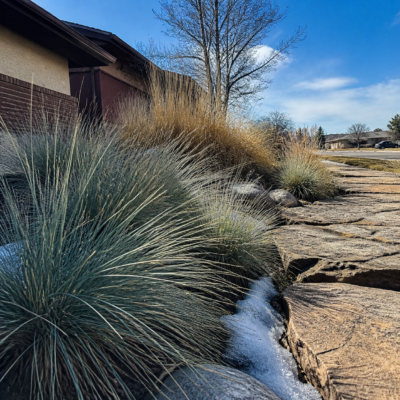
Which site conditions belong in a Denver commercial landscape scope?
Front Range contracts should identify snow-storage areas, freeze-thaw drainage, compacted soil work, Denver Water constraints, and the exact turf or planting zones included. Property measurements and documented exclusions provide the basis for a comparable proposal.
Denver Pro Landscape handles commercial landscaping for Denver offices, retail strips, apartment communities and HOA common areas. Pricing is scope based, so a walk-through comes first, and a written proposal usually follows within a few business days. Call (720) 650-0165 or send the property details through our free quote form.
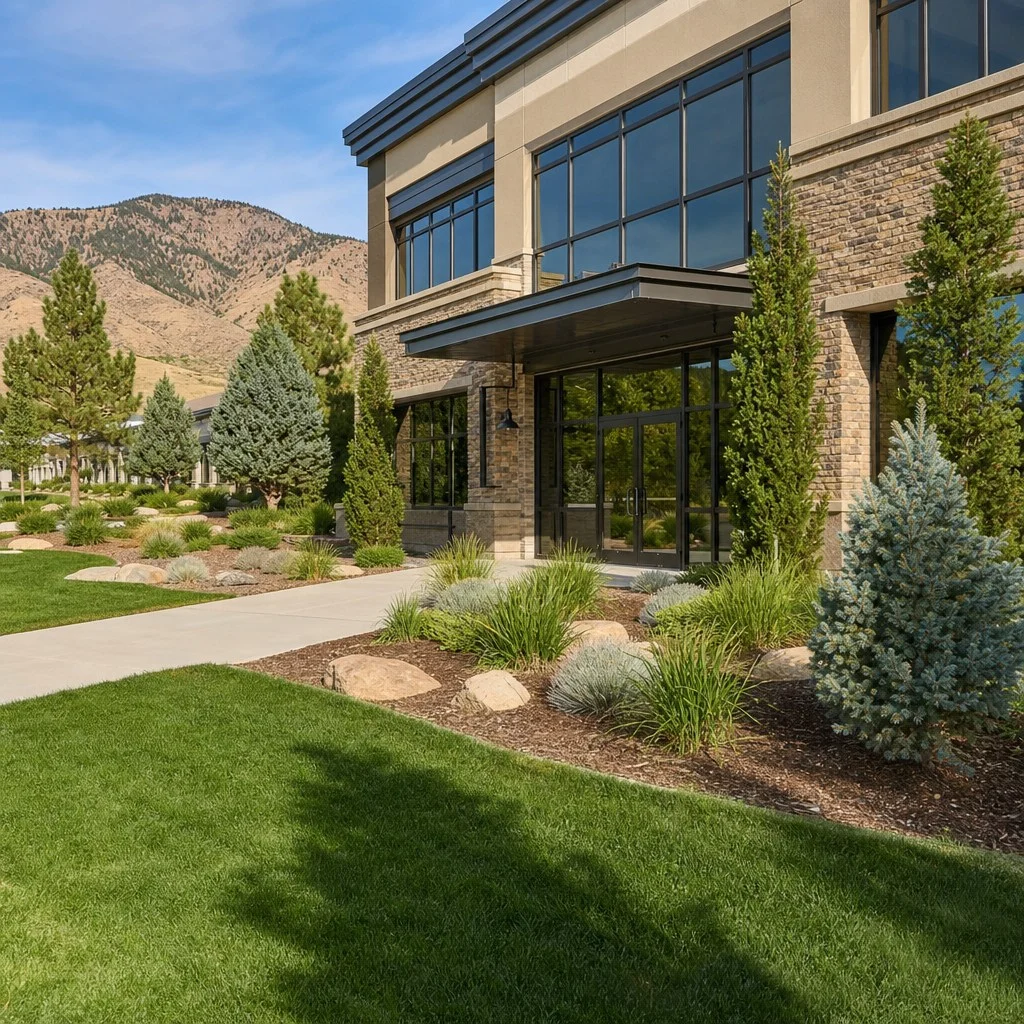
This page is written for property managers, board members and owners who have to defend a landscape line item every year. It covers what a Denver commercial scope should contain, how the water rules change a contract, what to ask a bidder, and how we run a job from first walk to routine visits. It is built around Front Range conditions: heavy clay, a short growing season, hail, and a drought stage that has rewritten the rules for irrigation this fall.
What does commercial landscaping in Denver actually include?
A commercial scope in Denver normally covers turf mowing and edging, bed and shrub maintenance, spring and fall cleanups, leaf removal, irrigation start-up and winterization, tree and shrub watering during dry spells, and seasonal color. What goes in each line is written down per property, so two bids can be compared honestly.
The mistake we see most is a contract that says “grounds maintenance” and nothing else. That one line hides a dozen decisions. How many mowing visits per month in season? Are beds weeded every visit or every other? Who clears fallen leaves from the parking islands, and by when? Does the price include an October blow-out of the irrigation system, or is that a separate call-out?
We break a property into zones and write the scope zone by zone: street frontage, entry monuments, parking islands, building foundation beds, turf panels, detention areas, and any common courtyard. Each zone gets a frequency and a standard. The zones then roll up into a monthly figure for the growing season and a smaller figure, or a per-visit rate, for the dormant months.
Work we take on
- Weekly turf mowing, trimming and edging through the growing season, plus blowing off walks and lots.
- Bed maintenance: weeding, pruning, mulch top-ups and replacing plants that did not make it through winter.
- Spring cleanup and fall cleanup, including leaf removal from turf, beds and hard surfaces.
- Irrigation checks, spring start-up and fall winterization, coordinated with the irrigation service side of the business.
- Planting refreshes and layout changes worked out with our landscape design team.
How much does commercial landscaping cost in Denver?
There is no honest flat number, because acreage, turf-to-bed ratio, visit frequency and water access drive the price. We quote each property in writing after a walk-through. For a sense of material rates, our published guide puts installed rock and mulch at $65 to $120 per cubic yard.
Those material numbers come from our own Denver landscaping cost guide, which is written mainly around homes. Commercial pricing moves with a different set of inputs, and we would rather tell you that than stretch a residential range over a shopping center.
Here is what moves a commercial price in the Denver metro, in rough order of impact:
- Turf area and mowing frequency. Weekly cutting in May through September is the default for bluegrass and fescue. Less frequent cutting saves money and shows up as shaggy grass.
- Bed area and plant density. Dense perennial beds with seasonal color take far more labor per square foot than shrub beds with mulch.
- Slope and access. Berms, retention slopes and tight loading areas slow a crew down and sometimes rule out the larger mowers.
- Irrigation type. Spray zones and drip zones need different checks, and drip is what the current drought rules still allow for trees and shrubs.
- Debris load. Mature ash, elm and honeylocust canopies mean heavier fall cleanup than a lot planted with young ornamentals.
What should a Denver property manager ask a landscape contractor before signing?
Ask for a zone by zone scope, the visit count per month by season, how irrigation faults are reported and fixed, who handles the water-rule paperwork, and how extra work gets approved. A clear answer to each question separates a real proposal from a price sheet with a logo on top.
Our own guide to choosing a landscaper in Denver goes deeper, but these are the questions that matter most on a commercial account:
- What exactly is a visit? Mow, trim, edge and blow only, or does it include bed weeding and litter pickup?
- What happens when a visit is missed because of weather? Is it made up, or does it vanish from the schedule?
- How are irrigation problems found and who authorizes the repair cost?
- What is the response plan for a hail event or a heavy wet snow that drops limbs across a lot?
- How will you tell us about drought-stage changes, and who adjusts controllers?
- What does a change order look like, and what is the approval step?
Anything vague on that list becomes a billing argument in July. We would rather have it argued over in writing at the start.
How do Denver Water drought rules affect a commercial property?
Denver Water has prohibited lawn watering and all spray irrigation since Oct. 1, until the Board of Water Commissioners acts. Trees, shrubs and other plants may still be watered by hand with a shutoff nozzle or with drip. Commercial violations carry a $1,000 first charge and $2,000 after that.
The enforcement table we track on our Denver watering rules page, read from Denver Water’s own pages and last verified October 6, 2026, looks like this for commercial customers:
| Customer type | First violation | Second violation | Later violations |
|---|---|---|---|
| Commercial, industrial and municipal | $1,000 charge | $2,000 charge | $2,000 charge and suspension of service |
| Multifamily with more than 10 units | $1,000 charge | $2,000 charge | $2,000 charge and suspension of service |
| Irrigation-only account | $2,000 charge and suspension of service | Not applicable | Not applicable |
Two lines in that table matter most for an owner. First, an irrigation-only meter, which is common on HOA entries and street medians, goes straight to a $2,000 charge and a suspension. Second, a controller left on its old schedule is the most common way a commercial account trips the rule, because nobody on site is watching a clock at 5 a.m.
Denver Water also stopped issuing Watering Establishment Permits after Sept. 30, until further notice. In plain terms, new sod or seed cannot be watered with spray irrigation right now. Any installation that depended on a permit has to wait, or be switched to plantings that drip can carry. Denver Water adopted temporary drought pricing on outdoor use too, in effect through April 30, 2027, unless the board changes it, so the outdoor line on a water bill will not behave like last year’s.
Large parks, schools and golf courses may keep watering because they run on Denver Water approved water budgets. A private office park does not get that carve-out, and tenants sometimes ask why the school across the street is green. The answer is the budget arrangement, not an exemption for you.
What does our commercial landscaping process look like, step by step?
We start with a site walk, put the scope and frequencies in writing, agree a schedule with your property team, and then run routine visits with a seasonal check-in. The first proposal usually lands within a few business days of the walk. Nothing starts until you approve the written scope.
- Request and site walk. You call or use the quote form. We arrange a walk-through, ideally with whoever knows the property’s problem areas, such as the manager or the maintenance lead. Plan on about an hour for a mid-size property. You decide who attends and what gets raised.
- Written scope by zone. We list zones, tasks and visit frequencies, with a seasonal calendar. You review it and mark what to add or drop. This step normally takes a few business days on our side.
- Water and access check. We confirm irrigation type, controller location, hose bibs, gate codes and any days the lot is off limits. You decide who is the authorized contact for repairs.
- Start-up visit. The first visit is a baseline cleanup so every later visit is measured against a known starting point. You walk it with us or sign off remotely.
- Routine visits. Weekly in the growing season, lighter in the dormant months, on the days written in the scope. You get notice when something needs a decision, such as a dead shrub or a leaking head.
- Seasonal turns. Spring cleanup, fall leaf work and winterization are scheduled ahead of the weather, not after it. You approve any optional upgrades at these points.
- Annual review. Before renewal we go through what worked, what drifted and what the next season should include. You decide whether to renew, change or re-bid.
How does Denver’s clay soil and short season change a commercial scope?
Denver sits on heavy, alkaline clay, with a pH around 7.5 to 8.0, that drains slowly and compacts hard. The growing season runs roughly 150 to 160 days. Commercial scopes need annual core aeration, compost where beds fail, and a calendar built around a mid-May last frost.
Our Denver soil guide explains the chemistry. For a property manager, the practical effects are three. Turf in parking-lot islands compacts from foot traffic and mowing equipment, so it thins every year without aeration. Shrubs such as maples and some oaks yellow between the veins because high pH locks up iron, which looks like a watering problem and is not. And expansive clay shifts under edging and paved surfaces, so low spots near curbs collect water after storms.
The frost date guide lays out the calendar. Average last frost falls in early to mid May and the first fall frost in late September to early October. A warm week in April tempts crews to put out annuals, and a May freeze takes them back out. We hold tender color until the risk has passed and plant cold-hardy material earlier.
Can we cut water use on a commercial property without losing curb appeal?
Yes, by converting turf nobody walks on into planted, drip-fed beds. Our published Denver guide puts installed xeriscape conversion at $8 to $20 per square foot, and Resource Central estimates about 10 gallons saved per square foot of lawn converted each year. Rebates and discounts change, so confirm current terms before budgeting.
Look at where your turf actually earns its keep. A lawn panel that tenants use for lunch is worth keeping. A strip of bluegrass between a parking lot and a street, which nobody crosses on foot, uses the same water and gives nothing back. Our xeriscape versus turf comparison walks through the tradeoffs, and the xeriscape rebate page tracks what is on offer.
One caution from the current drought stage. A conversion that relies on spray irrigation to establish new plants is stuck behind the closed permit window. Drip-fed planting of trees, shrubs and perennials is still allowed, so a conversion planned around drip is the version that can proceed. If you want a plan on paper before the next season, the design team can draw it up and phase it.
How do you handle hail, wet snow and storm damage on commercial grounds?
The metro sits in a hail-prone corridor, and the tree-breaking storms are usually wet snow in March, April or October rather than midwinter. After a storm we photograph damage, clear hazards from walks and lots first, and bring a repair list to you for approval before any larger cut or replacement.
Two planning habits reduce the damage ahead of time. Structural pruning in the dormant window removes weak limbs before the spring storms arrive. And plant selection matters for hail: fine-textured perennials and ornamental grasses come through looking almost untouched, while large-leaved plants such as hosta and young aspen get shredded. If you manage a property with an older canopy, our blog piece on ice storms and summer droughts goes through the decisions, including the emerald ash borer question on mature ash.
After a storm, do not rush to cut back shredded foliage. Damaged leaves still feed the plant, and most perennials push clean new growth within a few weeks.
What permits and approvals can touch a commercial landscape job?
Maintenance work needs no permit. Changes do: Denver requires a zoning permit for walls over 12 inches high, fences over 4 feet tall need one, and street trees in the public right-of-way need a free permit from the Office of the City Forester, with review of up to 5 business days.
The full list of what we verified on the city’s pages is on our landscaping permit guide. Two commercial notes. Denver’s fence and wall page treats walls over 6 feet as needing commercial engineering plan review and a building permit, so a larger retaining wall is not a casual add-on. And grade changes near street setbacks can trigger a zoning grade change exception, which is a good reason to raise drainage questions early, ideally alongside our notes on drainage and grading.
Before anyone trenches for a new line or digs a planting bed deeper than a few inches, call Colorado 811 for utility locates. Commercial lots are full of buried irrigation, electrical and communications runs, and a locate request costs nothing compared with a cut cable.
What does a typical commercial job look like?
Three typical scopes show how the pieces fit together on a Denver property. They are illustrations of how we structure the work, not a record of specific clients or past jobs, and every property still gets its own written scope after a walk-through with you.
A typical small office park
One building, a parking field with six turf islands, a front entry bed and a rear patio strip. Weekly mowing and trimming in season, bed weeding every second visit, spring cleanup, a fall leaf pass and an irrigation winterization before the first hard freeze. The property manager approves plant replacements once in spring.
A typical apartment community
Several buildings around shared courtyards, a clubhouse entry and a street frontage. The scope separates high-visibility zones, which get weekly detail work, from interior turf, which is mowed on schedule. Leaf removal gets its own two-pass line because courtyard trees drop heavily, and the manager signs off on an annual color order.
A typical HOA entry and common area
A signed entrance, a median, a retention slope and a small park. Much of the water here sits on an irrigation-only meter, so the scope includes controller checks at the start and end of each season and a written note on which zones are drip and which are spray. Board approval is needed for any plant change.
Which Denver-area properties do you serve?
We serve commercial properties across the metro, including Denver proper and nearby communities such as Aurora, Lakewood, Westminster and Thornton. Our areas we serve page lists every community. Routes are built geographically, so grouped properties are easier to schedule well.
Suburban pages we maintain for the metro include Aurora, Lakewood, Westminster, Thornton, Arvada, Centennial, Commerce City and Northglenn. Each community can set its own rules, so we confirm local requirements at the walk-through rather than assuming Denver’s carry across.
Why does fall leaf work matter so much on a commercial property?
Because leaves left on turf and in drains cause damage in a few weeks, and fall is also the busiest time on a commercial calendar. Matted leaves smother turf going into winter, block storm inlets and pile up in loading areas. A scheduled pass, rather than a reaction, keeps lots safe and drains clear.
A good fall plan has leaf passes keyed to the canopy, not to the calendar date. Honeylocust drops fine leaflets over a long stretch, while ash and maple come down in a rush. Our leaf removal service page covers the method, and the Denver landscaping calendar sets the rest of the seasonal sequence. Fall is also when the irrigation system gets winterized, and with spray irrigation already prohibited this year, that service is a cleanup of lines and valves rather than a seasonal scheduling choice.
How do we start?
Call (720) 650-0165 or use the quote form with the property address range, approximate acreage, and the irrigation setup if you know it. We will set up a walk-through, then send a written scope by zone for you to mark up and approve.
If you are comparing bids this season, ask each bidder for the same zone list and the same visit counts. That is the only way to tell whether a lower number is a better price or a thinner scope. And if the water rules are what has your board nervous, start with the walk-through anyway: the controller schedule and the drip layout are the first two things we look at.
What note supports a property requesting Commercial Landscaping?
A Denver commercial grounds specification can map snow storage, freeze-thaw drainage, compacted turf, irrigation zones, and tenant access before maintenance tasks are assigned. Each proposal should connect labor and materials to those measured Front Range conditions.
“Our Denver crew runs Commercial Landscaping across Denver County every week. Same teams, same schedule, same standard.”— Denver Pro Landscape Operations Team
- Professionally managed local crews on dedicated weekly routes
- Serving multiple Denver County suburbs on fixed route schedules
- Operator-grade scheduling and reporting
- Free written estimates on every job